
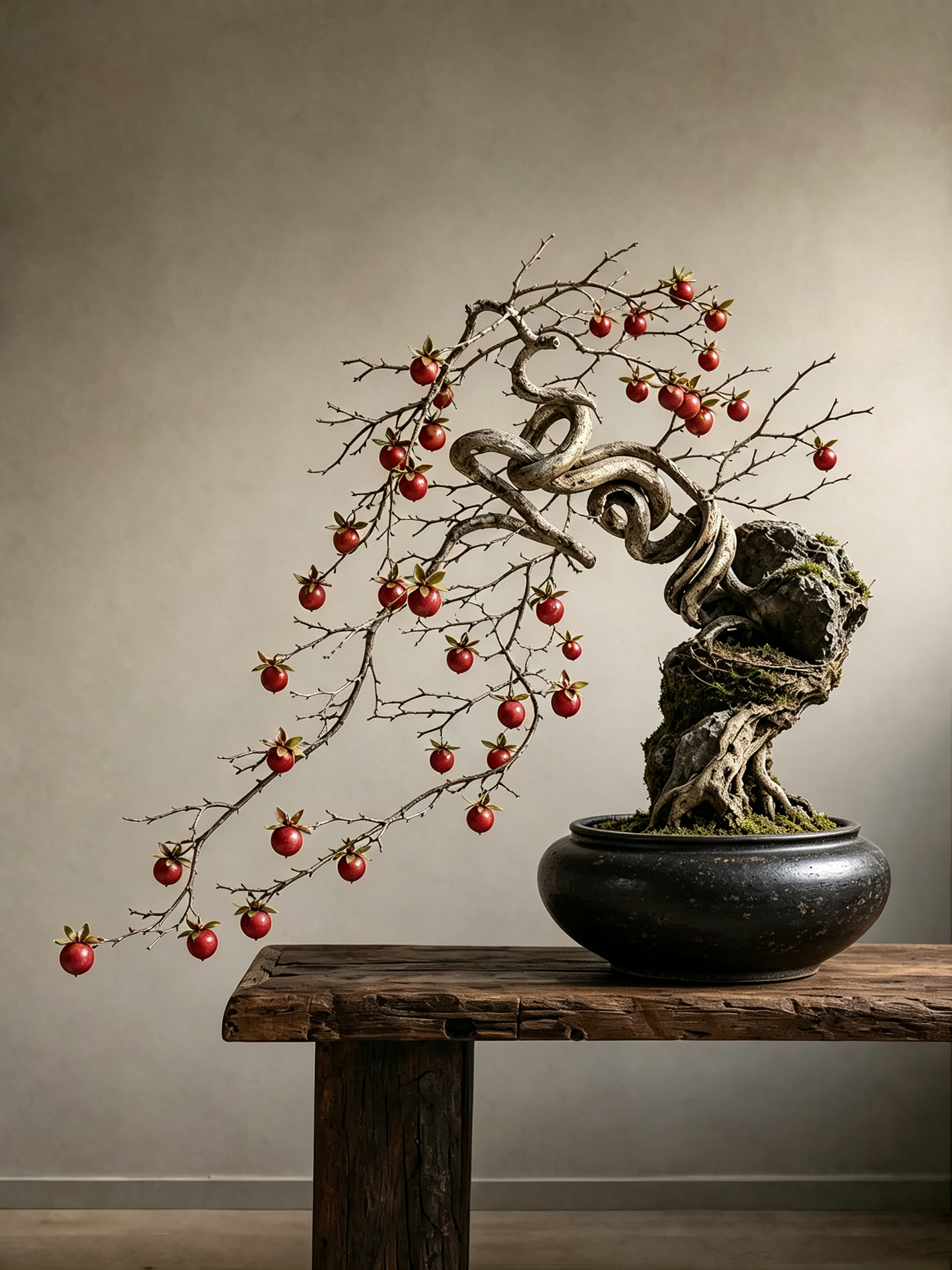
Demon Pill
Fruit Morphology: Perfectly spherical to slightly oblate small berry with a smooth, glossy epicarp. At full maturity, the fruit turns a deep scarlet-red to reddish-orange, heavily marked with tiny dark speckles or lenticels across the surface. It’s also called “Tianmu”.
Interested in this variety?
Contact us for pricing, availability, and shipping information.
Contact UsProduct Description
Fruit Morphology: Perfectly spherical to slightly oblate small berry with a smooth, glossy epicarp. At full maturity, the fruit turns a deep scarlet-red to reddish-orange, heavily marked with tiny dark speckles or lenticels across the surface. It’s also called “Tianmu”.
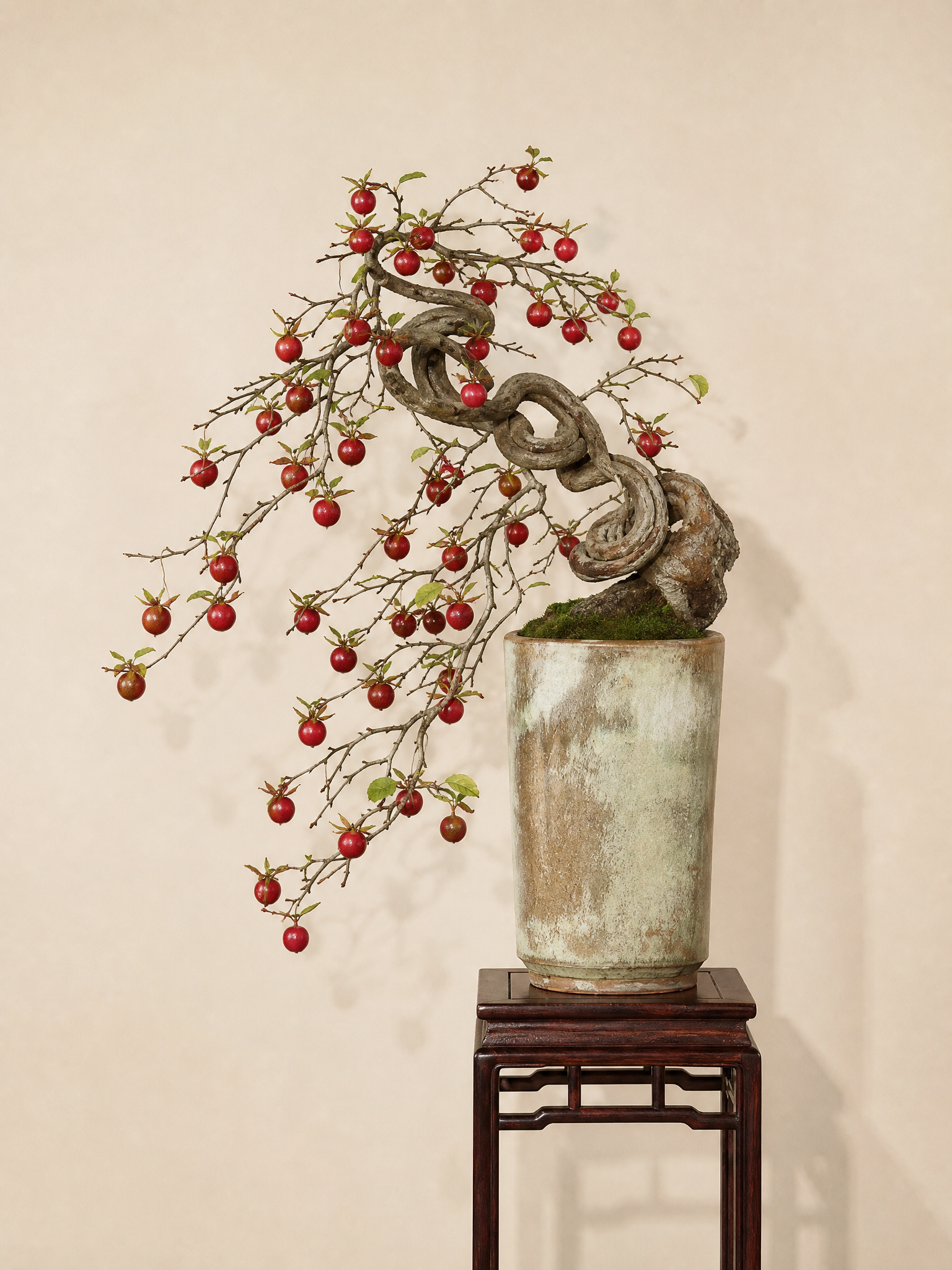
Calyx Architecture: A prominent, persistent 4-lobed calyx that opens outward horizontally above the fruit shoulder. The sepals are leaf-like, light lime-green with subtle brownish flecks, attached via a long, sturdy woody pedicel.
Foliage & Stems: Leaves are simple, alternate, and light yellow-green to olive-green with entire margins and distinct pinnate-reticulate veins. The mature wood displays thick, grayish, mature bark with visible pruning cuts, indicating structured bonsai/container training.
Ornamental Value: Highly sought after in bonsai art and specialty horticulture for its smooth, round fruit profile, striking speckled skin texture, contrast with yellowish-green leaves, and long persistence into winter.
Light Environment
Full sun or partial sun, with 4–8 hours of direct sunlight daily. Morning sunlight is preferred; avoid prolonged deep shade.
Humidity Environment
Maintain approximately 50–70% relative humidity with good airflow. Avoid continuously wet leaves and poor ventilation.
Air Circulation
Good ventilation and natural airflow are essential for healthy foliage. Suitable locations include open balconies, gardens, and well-ventilated bonsai display areas.
Soil & Root Environment
Use soil with excellent drainage, good aeration, and moderate moisture retention. Recommended pH: 5.5–7.0.
Suitable Growth Temperature
Diospyros rhombifolia, commonly known as Old Crow Persimmon, is a temperate deciduous species native to East Asia.
Optimal growth temperature:
22–28°C (71–82°F). This range supports active vegetative growth, healthy leaf development, flowering, and fruit enlargement.
Tips:
Maintaining a large temperature difference between day and night during autumn is beneficial for improving fruit coloration and enhancing ornamental value.
15–22°C (59–71°F)
Ideal for bud break, new shoot development, flowering, and early fruit formation.
32–45°C (89–113°F)
The plant can tolerate warm summers if sufficient moisture, air circulation, and partial protection from extreme heat are provided. Prolonged temperatures above 35°C (95°F) may cause leaf stress, reduced photosynthetic activity, and fruit drop.
17–25°C (62–77°F)
Cooler autumn temperatures promote chlorophyll degradation and enhance the development of attractive fruit colors, including orange-red, crimson, and purple-blood red tones.
−5–10°C (23–50°F)
As a deciduous woody plant, Diospyros rhombifolia requires winter dormancy. Mature trees can tolerate temperatures approximately down to –10°C to –15°C (14°F to 5°F) when roots are protected.